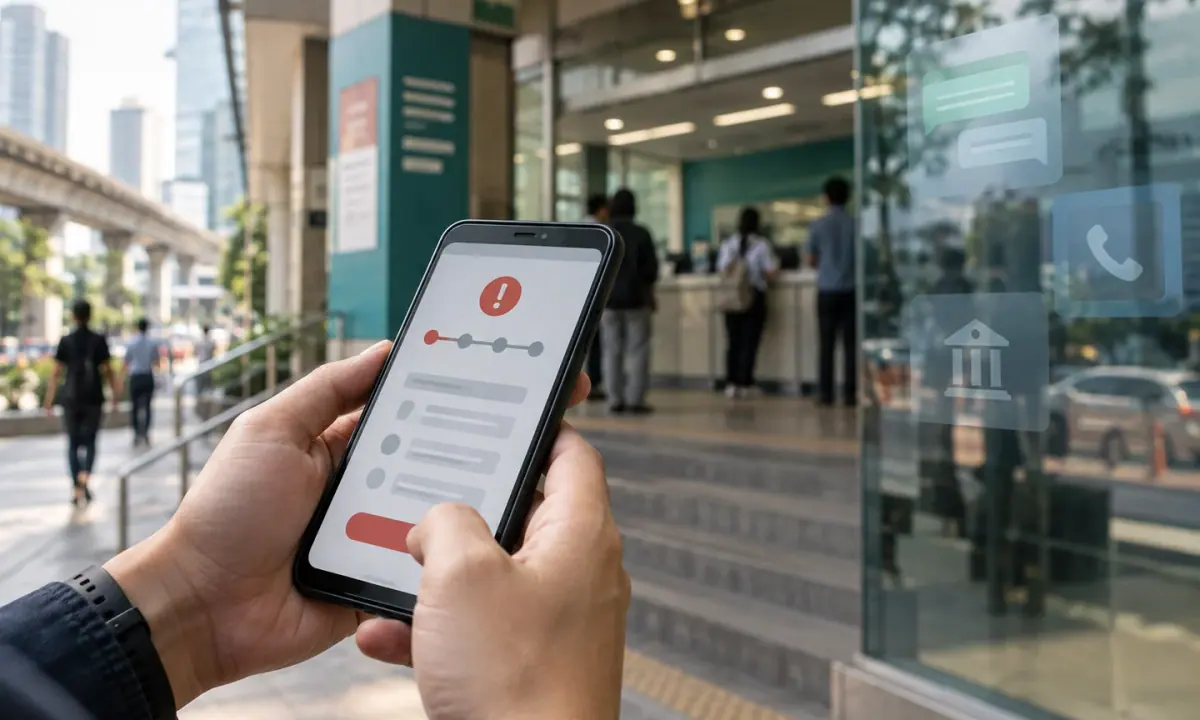
Forty-five per cent of reported scam cases in a new six-market Southeast Asian survey remained unresolved, according to the GSMA.
What the survey found
The GSMA ASEAN Consumer Scam Report 2026 covers Indonesia, Malaysia, the Philippines, Singapore, Thailand and Vietnam. Its findings are based on self-administered online interviews in local languages with approximately 500 adults per market, for a combined sample of 3,000. The regional figures are equal-weighted across the six markets. Milieu Insight conducted the fieldwork using non-interlocking quotas for age by gender, region and socio-economic class. Respondents gave informed consent, and the report says their data was anonymised.
Eight per cent of respondents said they had been scammed during the previous 12 months. Among surveyed victims, 68% lost money. Of those who lost money, 82% recovered none of it, while 10% recovered all their losses.
Messaging apps were involved in 41% of surveyed victims' scam experiences, followed by social media at 36%, voice calls at 35% and SMS at 30%. Forty-nine per cent of victims said their scam crossed more than one channel.
What the figures do not show
The findings distinguish consumer survey responses from administrative case records. They show how respondents experienced reporting and recovery, but they do not measure every scam reported to authorities or service providers across ASEAN.
Why resolution matters to operators
The report says consumers whose cases remained unresolved were less willing to trust communications channels, digital platforms and data sharing. People who had been scammed moved accounts or switched providers at more than twice the rate of consumers untouched by scams, 25% compared with 11%.
That behaviour turns scam resolution into an operating issue for legitimate businesses. Banks, telecom operators, platforms and government agencies can each receive part of a complaint, while no single organisation necessarily sees the full path across communications and payments.
A second report released alongside the survey, Digital Nations ASEAN 2026, argues that trust in digital infrastructure and services is becoming a condition for wider adoption of digital payments, artificial intelligence and digital government services. GSMA
For service providers, the practical test is not only whether users know how to identify suspicious activity. It is whether a report reaches the organisations able to stop a payment, preserve evidence and explain the outcome to the person affected.
The GSMA calls for clearer reporting pathways, better information sharing and measurable resolution outcomes across governments, mobile operators, financial institutions and digital platforms. The survey does not establish which intervention works best in every market; consent to data use and confidence in institutions vary substantially across the six countries.
Source note
SEA Connect based this report on the GSMA's 9 September announcement, the ASEAN Consumer Scam Report 2026 and Digital Nations ASEAN 2026. Survey findings are presented with their stated respondent groups and are not treated as administrative case totals.