
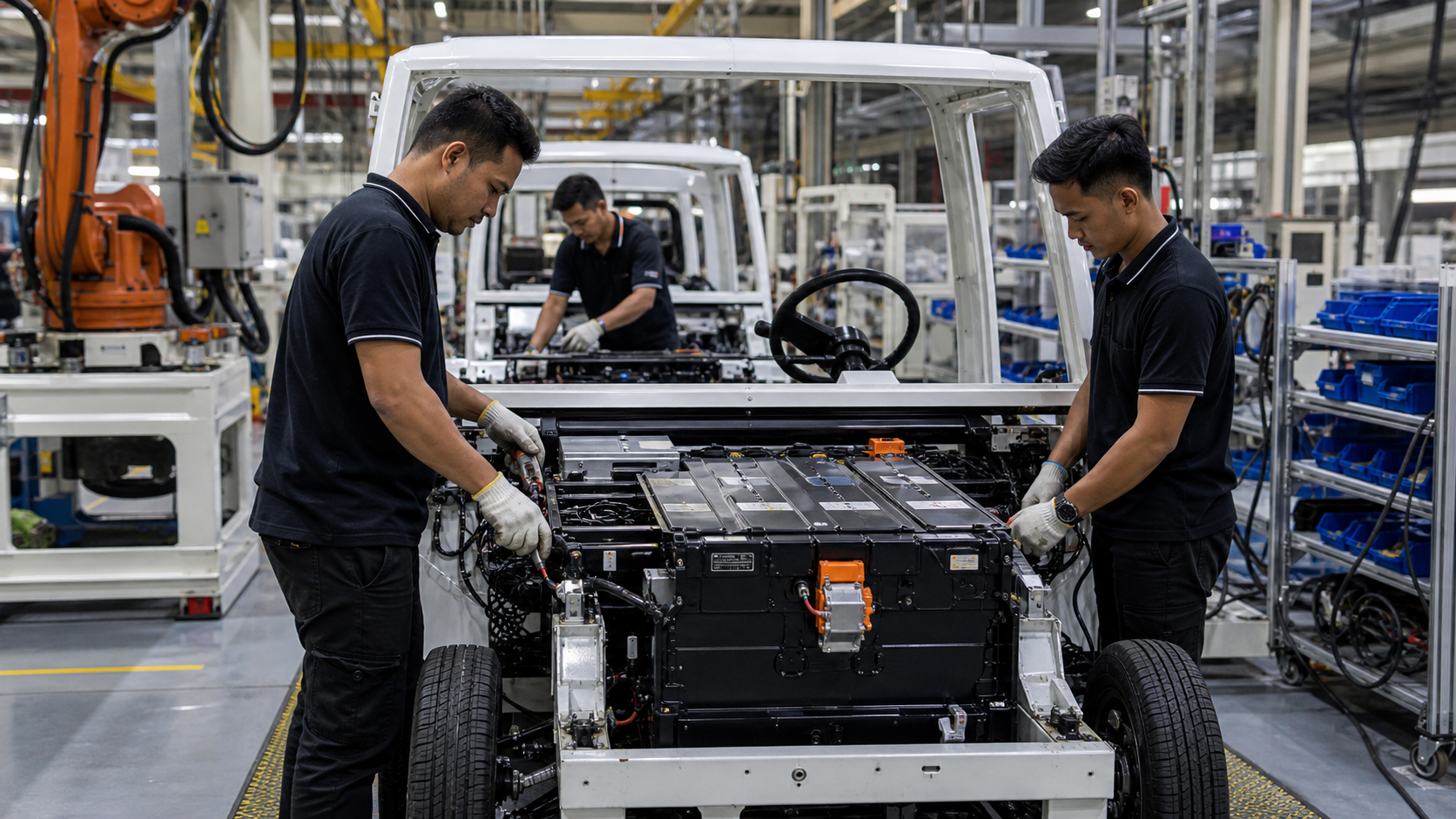
The Philippines Department of Finance welcomed an executive order that it says will help local electric-vehicle manufacturing.
Why it matters
The policy signal matters because Southeast Asian governments are competing to attract electric-vehicle assembly, battery supply-chain activity and related manufacturing investment.
For manufacturers and suppliers, tariff treatment can change the economics of local assembly, component sourcing and market entry. The practical impact will depend on the exact order and investor response.
Reader context: the article is written for business, investment, technology and policy teams that need to understand whether a single announcement changes market access, operating capability, procurement needs or competitive positioning in Southeast Asia. SEA Connect separates that regional interpretation from the facts attributed to the linked publisher, so readers can judge the business relevance without treating the announcement as a finished outcome.
For regional operators, the practical test is follow-through: budgets, named partners, adoption data, customer behaviour, procurement notices, implementation milestones and cross-border replication. Those signals turn an announcement into a clearer view of execution quality and market consequence.
How to read the source
The department’s statement explains the government’s intended policy direction. New factories, suppliers and jobs require separate investment and employment records.
What to watch
The next evidence to watch is company investment, supplier localisation, vehicle output, charging-infrastructure readiness and whether incentives align with regional EV competition.
Source note
Source: Philippines Department of Finance EV manufacturing announcement. SEA Connect names the publisher directly and keeps interpretation separate from the facts stated in the linked source.