
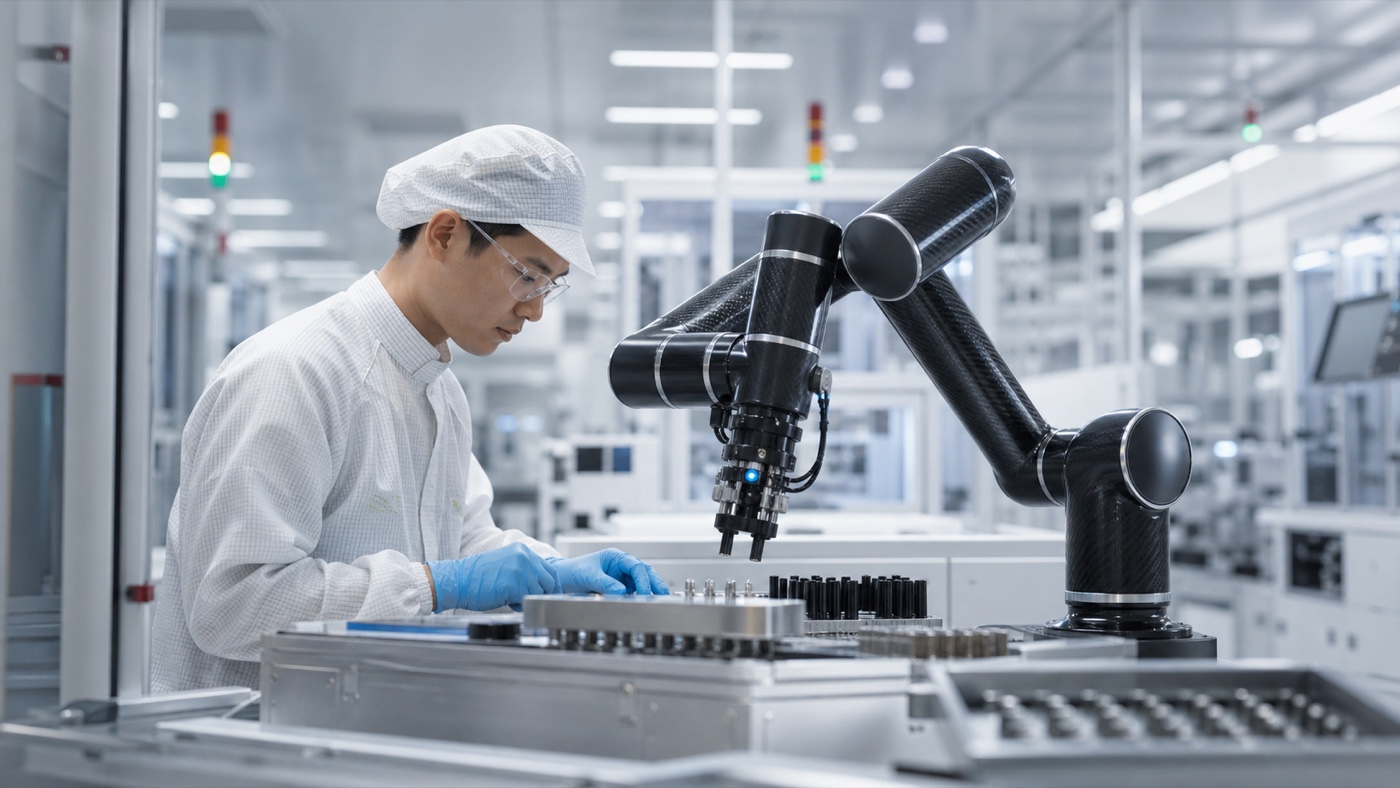
Epson has introduced its AX6 collaborative robot in Southeast Asia, beginning with Singapore, as manufacturers look for automation that can fit into compact and tightly controlled production environments.
The six-axis arm has a payload of up to six kilograms, a reach of about 900 millimetres and repeatability specified at plus or minus 0.03 millimetres. Its carbon-fibre structure is designed to reduce weight while retaining rigidity. Epson
The system supports hand-guided teaching, block programming, Python and Robot Operating System development. That range lowers the entry barrier for basic deployment while leaving room for engineers and integrators to build more complex workflows.
Cleanroom compatibility and a screw-free outer design make the AX6 relevant to electronics, pharmaceutical and medical-device production. Epson also positions it for logistics, automotive work and integration with autonomous mobile robots.
For Southeast Asian manufacturers, the commercial question is not whether collaborative robots are technically possible. It is whether smaller plants can integrate them safely, retrain workers and achieve a payback period that competes with conventional automation or additional labour.
The regional launch establishes availability. Evidence of local installations, integrator capacity, operator training and measured productivity gains will show whether the AX6 moves beyond demonstration systems into routine factory use.
Collaborative robots are designed to work closer to people than traditional fenced industrial systems, but “collaborative” describes an application and risk assessment rather than an automatically safe installation. Tooling, speed, payload and the surrounding process still determine what safeguards are required.
Programming options may help manufacturers with limited specialist staff. Hand guidance and blocks can shorten setup for repeatable tasks, while Python and ROS support give integrators a route into machine vision, mobile robotics and wider factory systems.
Southeast Asia’s manufacturing base spans global semiconductor plants and smaller suppliers. The AX6 will be commercially significant if local integrators can package it into affordable, supportable cells for the latter group, rather than limiting deployment to large demonstration facilities.
Workforce outcomes also deserve measurement. The useful comparison is not simply robots versus jobs, but whether automation removes hazardous or repetitive work while creating operator, maintenance and integration roles that local training systems can fill.
Regional supply chains add urgency. Electronics, medical-device and precision manufacturers face pressure to deliver consistent quality while coping with labour constraints and shorter product cycles. Flexible robotic cells can help if they can be reconfigured without lengthy shutdowns.
Epson’s existing presence in imaging and industrial automation may support local sales and service, but buyers will still compare the AX6 with established cobot suppliers. Price, software maturity, spare parts and integrator familiarity will influence purchasing as much as headline specifications. Successful reference installations in Southeast Asia would give prospective buyers a clearer basis for that comparison.
What we checked
The launch was reported by multiple credible media reports and checked against Epson’s official AX6 product information.