
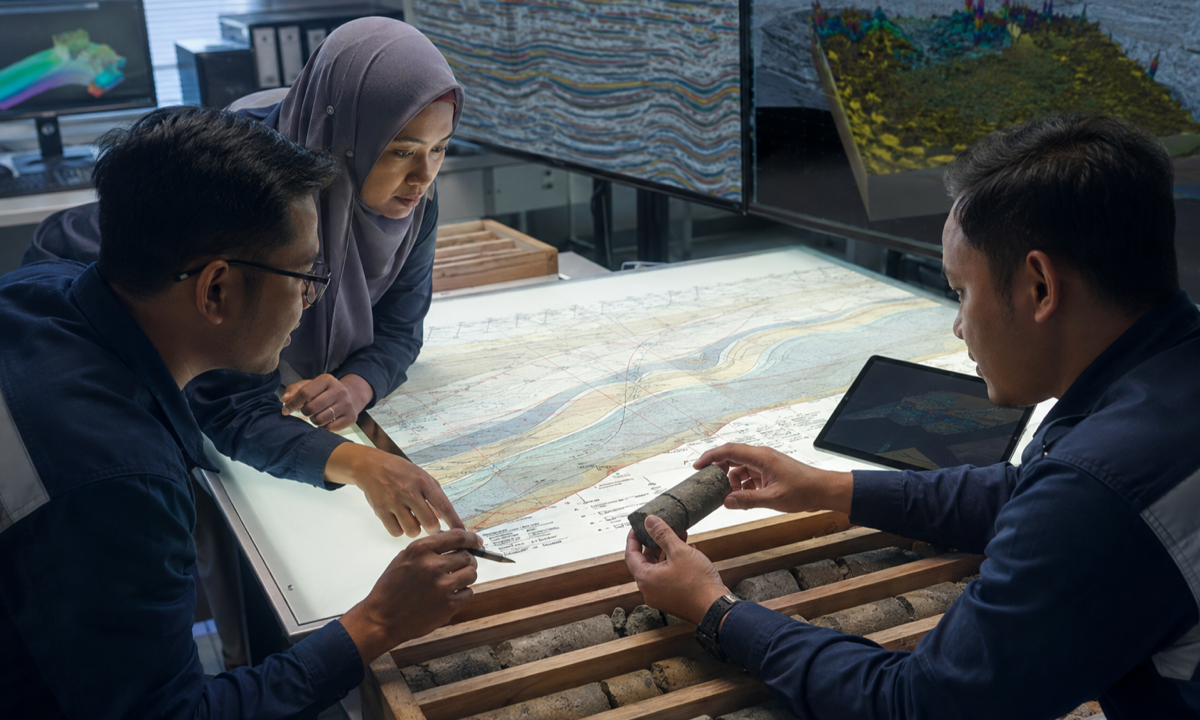
PETRONAS, through Malaysia Petroleum Management, has signed an agreement with Iraya Energies to add agentic-AI capabilities to PETRONAS's platform for evaluating Malaysian oil-and-gas opportunities, myPROdata. PETRONAS announced the agreement on 4 September and identified Iraya as consortium lead integrator. The contract is a concrete enterprise-technology step. The public release does not state a production launch date, contract value, user count or measured improvement from the planned system.
The platform provides access to geological, geophysical, engineering and other information about exploration blocks, discovered resources and producing fields in Malaysia. PETRONAS says the enhancement will connect these data types and allow users to navigate, analyse and derive insights more efficiently. It also describes support for assessments from prospective areas through resources, development opportunities and commercial viability.
The term agentic AI matters only if the implementation does more than generate summaries. PETRONAS says the capabilities are intended to analyse and connect multiple data sources autonomously. Iraya’s stated responsibility includes the technical, commercial and security foundations for delivery and broader rollout. Those obligations make governance, permissions, auditability and source traceability central to whether the system can support investment decisions safely.
For upstream investors, faster access to connected data could reduce friction during early opportunity screening. Engineers may be able to move between subsurface evidence, resource assumptions and development considerations with fewer manual handoffs. That is the intended use case. The release does not provide a benchmark showing that the enhanced platform has shortened analysis, improved decisions or moved a project towards investment.
PETRONAS links the programme to an ambition to attract roughly RM50 billion to RM60 billion in annual upstream investment and to shorten the path from discovery to first hydrocarbon from 100 months to 50 months. These are targets, not results produced by the AI agreement. Many regulatory, engineering, commercial and project-execution steps sit between better data access and an operating field.
The wider Southeast Asian relevance is the movement of agentic AI into a regulated, capital-intensive operating process. Enterprise buyers across the region face similar questions about whether AI can work with trusted domain data while preserving human accountability. A successful implementation would require more than model capability: data quality, security controls, user roles, documented assumptions and reviewable outputs are equally important.
There are also limits to the public evidence. PETRONAS is both the platform owner and the source describing expected benefits. No independent user assessment, security architecture, model evaluation or procurement detail is included. SEA Connect therefore does not describe the system as live or claim that it already improves investment outcomes. The agreement establishes delivery responsibility and intended scope.
The next proof points are a production release, named user workflows, evaluation criteria, security and governance details, and measured changes in analysis time or decision quality. Evidence that investors actually use the enhanced platform would be stronger than a capability announcement. For now, the story is a contracted Malaysian enterprise-AI implementation with unusually clear domain and integration responsibilities, but unproven operating results.
What we checked
SEA Connect checked the agreement, platform scope and stated targets against PETRONAS’s official release.