
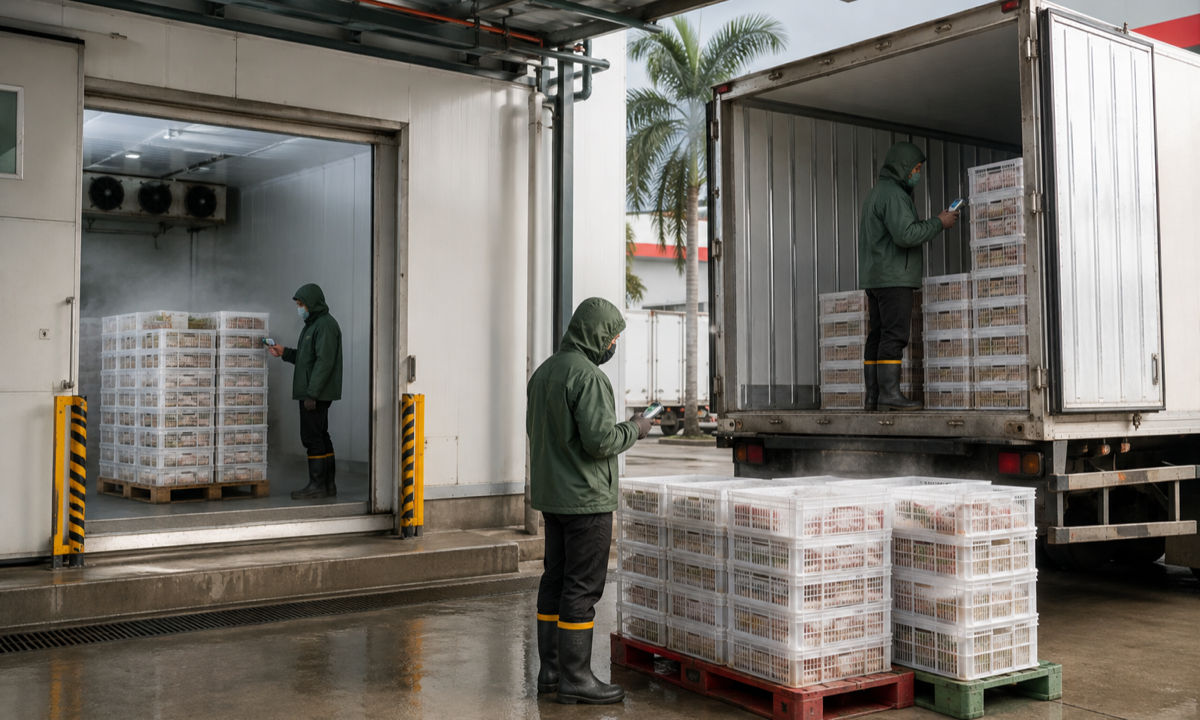
Peregrine Cold Logistics says it is entering Indonesia through a joint venture with Sinar Primera, combining the acquisition of an existing cold-storage facility in Pluit with a planned greenfield development in Narogong. The Singapore and Jakarta announcement describes a platform expansion, not completed new capacity. Construction timing, investment value, commissioned space and customer contracts were not disclosed in the source reviewed by SEA Connect.
The structure is notable because it mixes a running asset with a development project. An acquired facility can provide an earlier operating base, while a greenfield site can be designed around current refrigeration, energy and workflow requirements. The pairing could reduce the time needed to establish a local network, but only if the existing asset transfers cleanly and the new facility reaches commissioning.
Peregrine presents Indonesia as the next step after building a cold-chain platform in the Philippines. It says the wider network is intended to connect food producers, importers, exporters, consumer-goods companies and quick-service restaurants across ASEAN and the Gulf. Those are stated target users. The announcement does not identify signed customers, throughput commitments or a confirmed cross-border route.
Cold storage is part of Southeast Asia’s innovation economy because it combines physical infrastructure with monitoring, energy management, inventory control and transport coordination. A modern facility can help preserve food quality and support more predictable distribution, but its value depends on reliable power, disciplined handling and integration with the vehicles and warehouses before and after it.
Indonesia adds a scale test. Its dispersed geography and large consumer market create demand for temperature-controlled logistics, while traffic, power costs and uneven infrastructure can complicate service. A Jakarta foothold does not by itself solve national distribution. The useful evidence will be the facility catchment, temperature ranges, backup systems, route coverage and service-level performance.
The commercial model also matters. Cold-chain projects require capital before occupancy and utilisation are proven. Investors and customers will want to know whether the venture secures anchor demand, how it manages energy exposure and whether existing and new sites can operate as one system. A large building without stable throughput would not establish a successful logistics network.
For food manufacturers and retailers, added capacity could widen choices in storage and distribution. For smaller producers, access conditions may matter as much as headline space: minimum volumes, contract terms, quality systems and transport links determine whether the infrastructure is usable. The announcement provides no evidence yet on those operating details.
The next proof points are therefore concrete: closing of the Pluit acquisition, construction and commissioning milestones at Narogong, independently verifiable capacity, named customer use and service performance over time. Until those appear, the development should be treated as a credible market-entry plan with an existing-asset component, not as completed regional cold-chain capacity.
What we checked
The company announcement was checked on Bernama’s wire service.