Singapore will introduce its sustainable aviation fuel levy for origin-destination passengers and general and business aviation on tickets or services sold from 1 October 2026, for flights departing from 1 January 2027. The Civil Aviation Authority of Singapore confirmed on 3 September that cargo services will follow a year later: sales from 1 October 2027 for flights departing from 1 January 2028.
CAAS says cargo operations involve a wider range of businesses and commercial arrangements than passenger operations. The deferral gives airlines, air express companies, freight forwarders and shippers more time to develop the collection mechanism. The cargo timetable is therefore specified, although implementation work remains.
The announcement also describes the commercial infrastructure supporting lower-carbon aviation fuel. The Singapore Sustainable Aviation Fuel Company Ltd. (SAFCo) will aggregate demand, procure fuel and manage its associated environmental attributes. The levy proceeds will enter a statutory fund used for fuel, environmental attributes and associated administration.
Environmental attributes will be tracked separately from the physical fuel. CAAS says aircraft operators will receive eligible Scope 1 attributes, while SAFCo will manage Scope 3 attributes and unallocated Scope 1 attributes centrally. Organisations seeking to address emissions associated with business travel and air freight will be able to purchase those centrally managed attributes.
CAAS also reports that SAFCo completed procurement for its first voluntary trial in August 2026 with nine companies, including Singapore Airlines and Scoot. The trial tested procurement and allocation processes. It does not establish the emissions reduction of any particular flight or guarantee the performance of the full levy programme.
For Southeast Asian airlines and businesses buying travel or freight services through Singapore, the practical issue is how fuel procurement, levy collection and emissions accounting will fit together. This is SEA Connect analysis of the announced framework: those processes can shape demand for sustainable fuel and the evidence available for corporate reporting.
SAFCo plans to launch a procurement request for proposal by the end of 2026, with first fuel delivery and uplift expected in mid-2027. These remain planned milestones, not evidence of fuel already delivered or environmental benefits already measured.
The levy must appear as a separate line in the fare breakdown, according to CAAS. Its framework also sets an allocation threshold: aircraft operators contributing above the minimum allocation threshold of 0.01% of total levies will receive Scope 1 attributes in proportion to their contributions. CAAS expects this to cover more than 80 passenger aircraft operators. That establishes an eligibility and allocation rule, rather than promising an equal allocation to every carrier.
CAAS defines the environmental attributes through a lifecycle comparison between sustainable aviation fuel and the same quantity of conventional fuel. It distinguishes airlines’ direct fuel-combustion emissions from indirect emissions associated with corporate travel and freight. Proceeds from centrally managed attribute sales are intended to fund further sustainable-fuel purchases. These accounting and funding arrangements explain why levy collection, physical delivery and corporate emissions reporting are separate parts of the programme.
Correction, 5 September 2026: Corrects the cargo levy timetable and explains the announced fuel-procurement and environmental-attribute framework.
What we checked
Civil Aviation Authority of Singapore
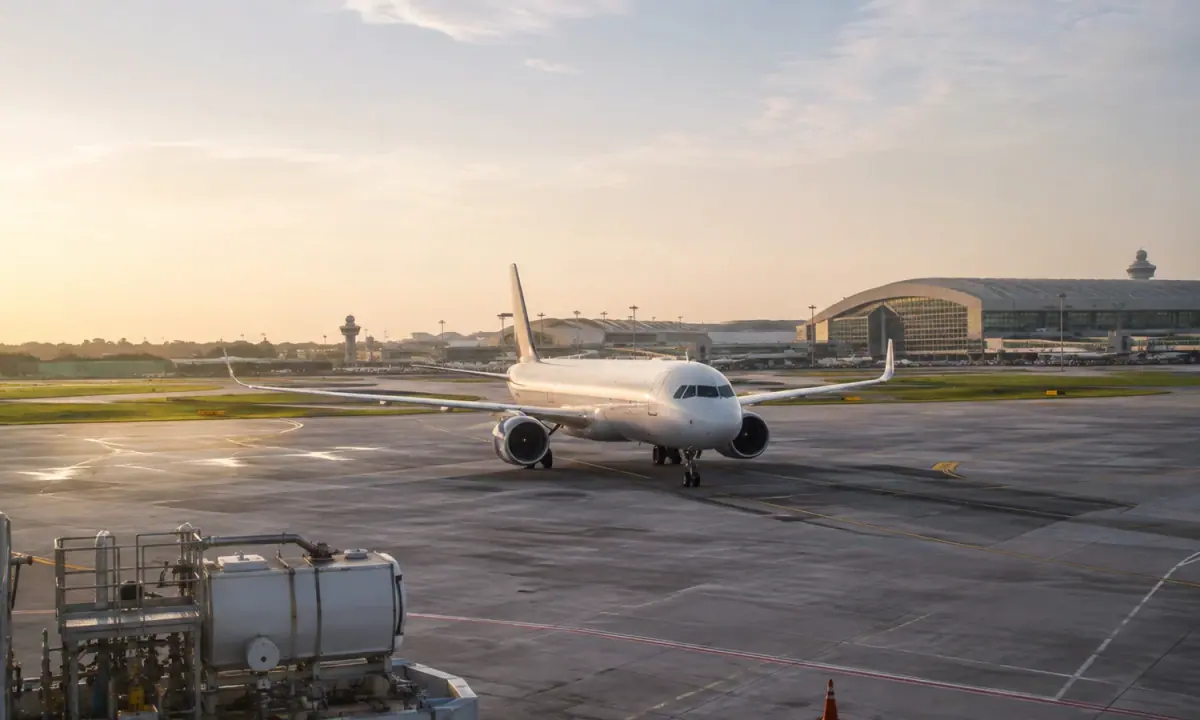
Illustrative scene created for SEA Connect